Ten years today I started blogging - avidly for a time here on Lady Mondegreen's Secret Garden. I'm pleased to see that I have actually posted a couple of times since this date last year when I had to fall back on the annual daffodil update. I was determined to be more interesting this year - and look what happened: NZ entered a new round of Covid-19 Levels to try and prevent the spread of a new outbreak. Such a good time to look back on my experience of our first Lockdown period which unfolded through those glorious autumn days. The day before the country moved to Alert Level 4 I picked up around $100 worth of ornamental plants for around $6 as a garden centre cleared out stock.
During that first week of Lockdown at the end of March the sky was full of planes flying university students home from Dunedin. By this time normal domestic flights had been cancelled. Mercy flights these may have been but I've heard since that they didn't come cheap.
I was the lucky recipient of a cafe clear-out, the goodies lasted me around two weeks with the perishables being used first.
No distractions away from home meant I could get stuck into jobs around the garden, though I stopped using the chainsaw early on. There were so many accidents drawing on emergency personnel that I thought I'd avoid the risk of adding to their workload.
The garden offered so much to eat - and supplemented my cafe delicacies.
But eventually I had to go to the supermarket. I remember the friendliness of everyone, the overall patience, the attention to detail by management - but ultimately feeling knackered by the time I had to pack my groceries from the trolley into the car.
Throughout New Zealand people were free to exercise at any time during the day as long as it was close to home. Exercise for me was within my garden and I kept to my one person bubble. Still I felt more connected to the village than usual - everyone was more prepared to greet, and make time for a chat. It was easy to keep our social distance on the wide country roadsides.
The front windows of the Skudder House joined in the national bear and easter egg hunt!
And I made the most of my Easter breakfast in the garden.
Mostly I didn't feel the need to leave my garden but I did hear about all the Easter decorations around the village - so made a point of going out for a look.
That was Autumn and now it's Spring. I feel less content in myself this time round. Getting caught up in the recent Covid testing has made me aware that without any certainty or clarity about when to expect test results I was less able to be my best altruistic self .
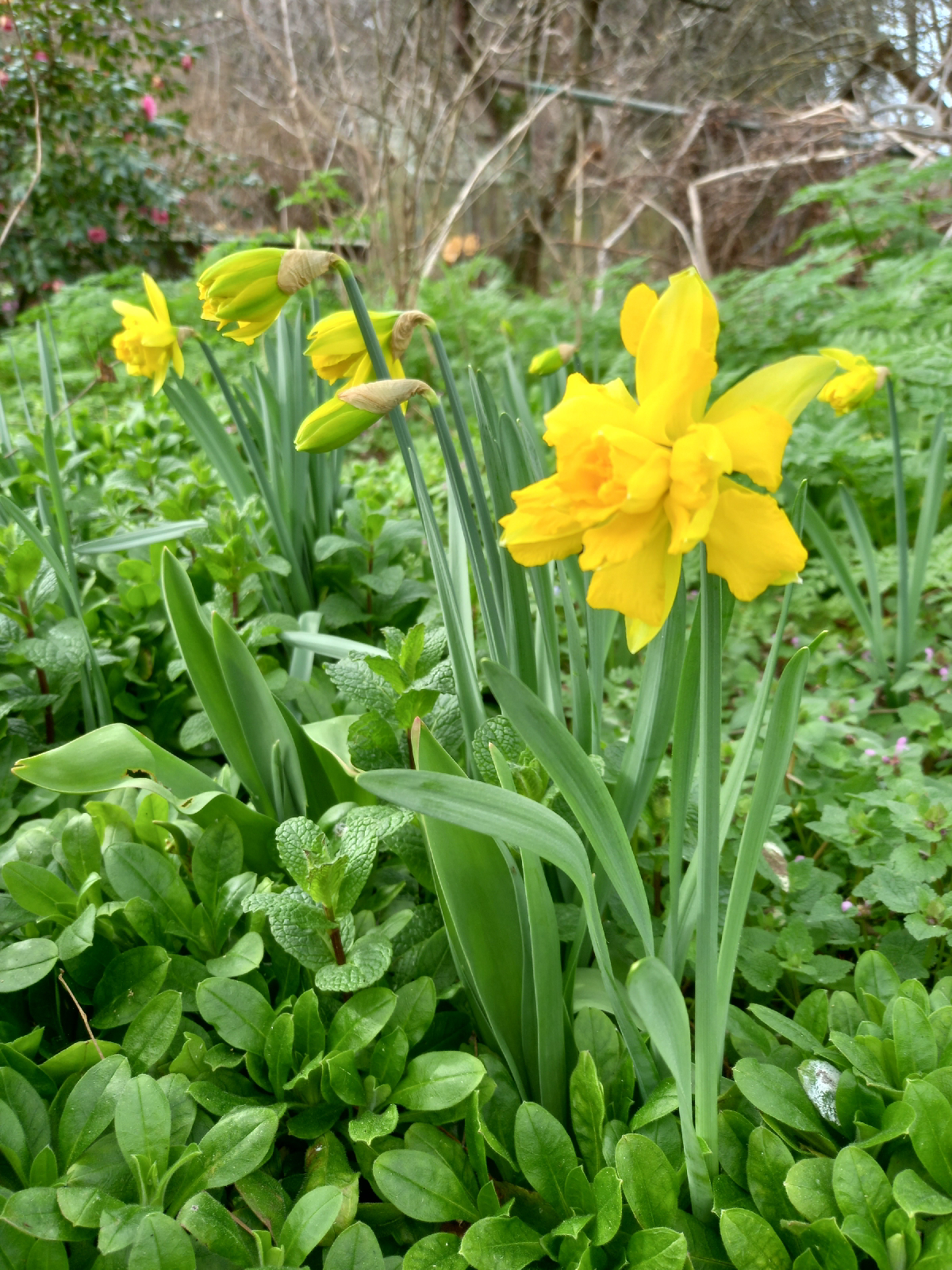
Just for the record, here are the Blog-opening daffodils at about the same stage as this time last year but well ahead of this date ten years ago. Only two blooms but many more than the five bulbs I rescued back then.